Hospitality & Investment
Historic Italian and European Residences as a New Frontier of Experiential Hospitality
Today, many international premium clients appear to be moving towards less standardised and more personal experiences — experiences rooted in the memory of places and their historical narratives.
9 December 2025 · 3 min read
From the traditional hotel to an experience of identity
For a long time, hospitality followed a relatively standardised logic: large properties, uniform services and replicable formats. The result was predictable and reassuring, but often with limited innovation. In recent years, however, a growing part of international demand has begun to seek something profoundly different — less connected to comfort alone and more to identity, atmosphere, authenticity, territory and architectural uniqueness. Historic Italian and European residences are therefore entering a new season of interest and becoming one of the more sophisticated frontiers of contemporary hospitality.
The contemporary high-spending traveller has changed. Luxury tourism was once associated above all with high standards, internationalisation and immediate brand recognition. Today, a significant part of the premium market is moving towards more personal, less standardised experiences that leave the conventional high-end hotel behind and engage with the memory and history of a place. Historic residences can offer this naturally.
The value of authentic imperfection
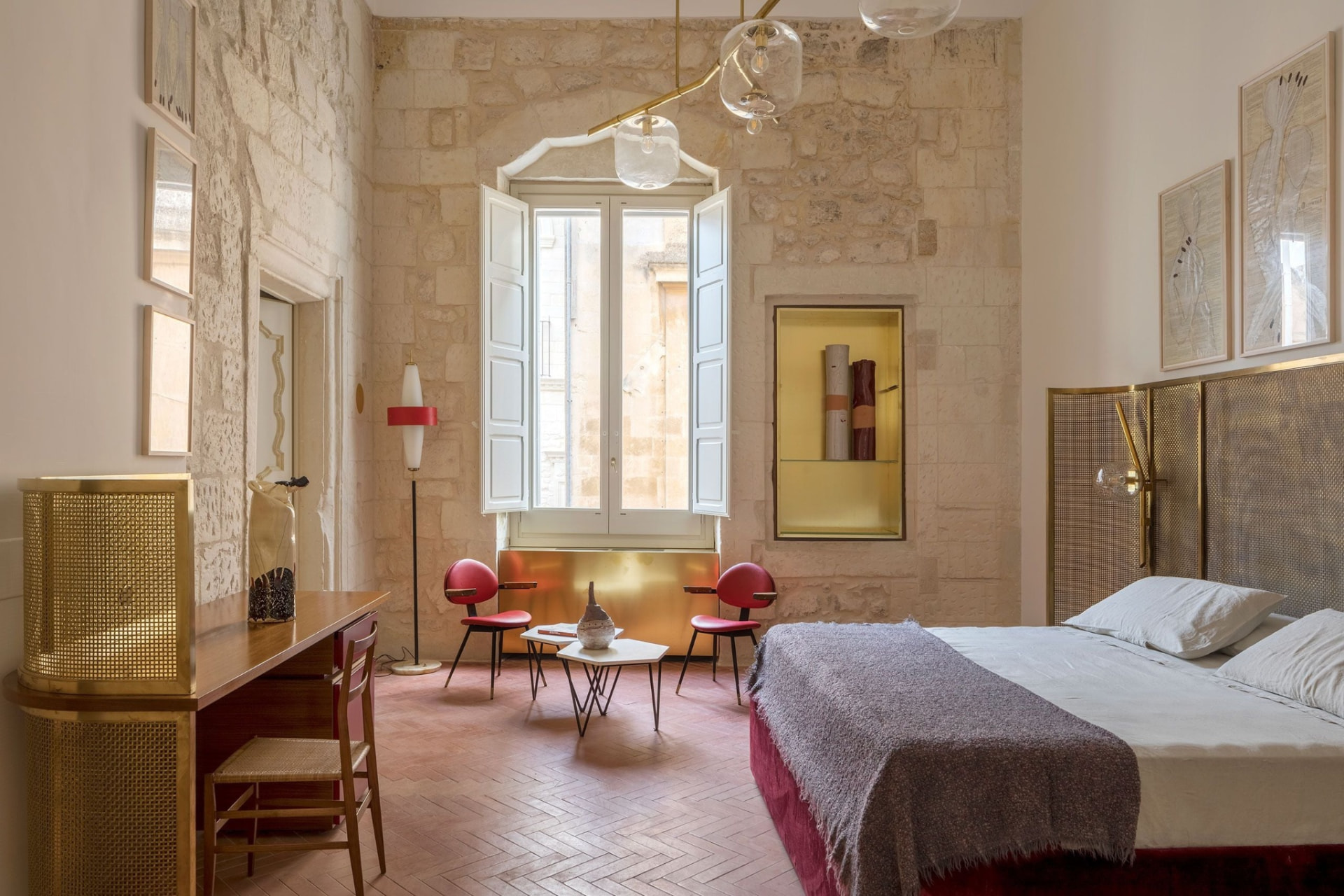
Historic residences contain qualities that the contemporary market struggles to replicate: internal courtyards, irregular volumes, valuable original materials and a strong relationship with landscape and local history. These properties communicate before they are even described. In an era dominated by aesthetic homogenisation and repeated hospitality formats, perceived uniqueness becomes an economic factor, generating greater desirability and experiential value.
The Mediterranean as an emotional platform
Italy, Spain, Greece, Portugal and other parts of historic Europe are benefiting from renewed international interest in Mediterranean cultural heritage. For investors and travellers alike, the Mediterranean can function as an emotional platform in which slowness, light and architecture combine with an authentic quality of life. Historic residences in these settings possess a competitive advantage that is difficult to reproduce: they do not simply provide accommodation, but cultural immersion.
Boutique hospitality and hybrid residences
Hospitality itself is changing. After years dominated by standardised models and scale, international operators are increasingly exploring more intimate, distinctive and relationship-driven formats: personalised experiences, small independent properties and hybrid residences positioned between private living and hospitality. Aristocratic palazzi, heritage villas, masserie, rural residences and buildings with strong architectural identity can become boutique residences, independent retreats, private suites or forms of distributed hospitality with a more authentic relationship to place.
The renewed importance of sense of place
One of the central concepts in contemporary hospitality is sense of place: a property's ability to communicate the cultural, architectural and territorial context in which it exists. Many technically impeccable luxury hotels are increasingly interchangeable. Historic residences are not. Cultural stratification, architectural memory and the relationship with landscape and local history can create an experience perceived as rarer, more authentic and more personal. Their strength lies not only in the quality of the building, but in the narrative depth of its surroundings.
Heritage hospitality and international investment
From an investment perspective, heritage hospitality is attracting growing attention. Historic European properties offer scarcity, differentiation, architectural identity and significant repositioning potential. In many cases, value depends on building a coherent language, recognisable narrative and distinctive cultural positioning around the property. Independent hospitality, boutique accommodation, converted historic residences and private hospitality assets therefore have increasing relevance.
A significant share of these opportunities remains off-market. Owners and investors often prefer private networks, direct relationships and more selective processes. The nature of the assets themselves tends to move them away from mass-market exposure. Heritage hospitality is consequently becoming more international, relationship-driven and curatorial. In contemporary luxury, value increasingly arises from the ability to offer something unrepeatable: atmosphere, authenticity, memory and cultural connection. Historic residences are returning to the centre of the international landscape not merely as buildings to be enhanced, but as experiential platforms capable of bringing together heritage, hospitality, culture, lifestyle and investment.
Whisper Property note — A growing number of off-market property opportunities across Europe and the Mediterranean are handled privately through selected networks and confidential presentations.